Dec 23, 2021

Throwback Thursday: Mrs. C and Mrs. G

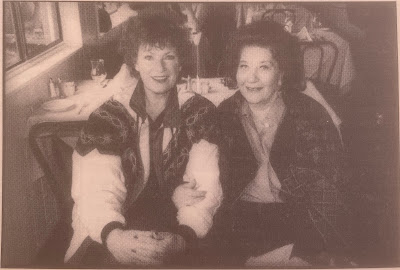
photo by Gary Leonard

I happened to have recently been going through old copies of Back Stage West, the actor's trade I ran from 1993 to 2003. This far-ranging and fascinating piece was in its very first free-standing issue, in February 1994. I was on hand to guide this conversation between two remarkable performers whose work I grew up on, but it's all their words. What a blessing to rediscover this. Enjoy!

ACTORS' DIALOGUE: Marion Ross and Charlotte Rae 


On the Middle West, Middle Children, and Acting Naturally 


Back Stage West, Feb. 10, 1994


For Back Stage West's first Actors' Dialogue—in which we get two professionals together over lunch to discuss their craft, their business, and their lives—we chose a pair of unassuming television icons, Mrs. Cunningman and Mrs. Garrett.


But as Marion Ross and Charlotte Rae discovered over a recent lunch at Alice's Restaurant on the endangered Malibu Pier, they have more in common than red hair and world-wide fame via syndication. For one, they've both starred in Happy Days: Rae in Beckett's, Ross in Garry Marshall's.


More importantly, over the years, they've built careers on the stage as well as the tube, raised families, been divorced, and sought out professional challenges even as they've settled into the security of success.


Marion: Didn't you do a musical with some of those Monty Python guys? What am I thinking of? A musical that you did, here in town. That was the first time I was aware of you. Before Into the Woods.


Charlotte: Was it Cole Porter's Out of This World, which they called Heavensent? That's the first time I came out here; I played Juno.


Marion: I don't think so. Because you are a musical star, right?


Charlotte: No, I'm an actress.


Marion: Or did you start in music?


Charlotte: I really have always sung. I started out in New York doing cabaret for a brief period of time. And that was wonderful. Everyone would come and see me—Jerome Robbins and everybody, they would come. It was the days of cabaret.


Marion: You mean in the Village?


Charlotte: Well, the Village Vanguard is where I started. Max Gordon—I'll never forget—I was there 14 weeks and I said, "Gee, Max, you think maybe, um, maybe I could have a little... raise?" I was making $150, that was my first thing. He said, "You know, I was thinking of changing the bill." I said, "Never mind, never mind."


Marion: I started under contract to Paramount when I was 22, and I got paid $150 a week. I'd been making $35 a week filing pieces of paper at Bullock's. This was in 1952. Here I was, a college graduate, San Diego State, with all kinds of honors and stuff. I had no skills, no way to earn a living, but I knew the alphabet. You knew the alphabet, you could file.


Charlotte: That's what I did. I worked filing and typing at this management consultant company on East 38th, and at night I worked in a saloon called the Sawdust Trail. That was my very first job, with Theresa Brewer; we used to stand on the bar and sing every half hour.


Marion: And what would you wear? A little Western outfit?


Charlotte: A gown. And right on the bar, they would roll in from the street, sawdust on the floor and ex-vaudevillians performing, singing waiters. My father came and started to cry because the cigarette woman tried to hustle him. And I had to reassure him that I wasn't a bad girl, that I was a reflection of him.


Marion: Where were you raised?


Charlotte: In the Middle West. Where were you raised?


Marion: In the Middle West.


Charlotte: Wisconsin.


Marion: Minnesota.


Charlotte: Well…


Marion: Well, there we are, isn't that something?


Charlotte: We're Middle Western girls.


Marion: Now, did you go to college?


Charlotte: I went to Northwestern.


Marion: Who all went to Northwestern when you were there?


Charlotte: Oh, there was Patricia Neal. And Jean Hagen—remember Jean Hagen?


Marion: Sure I do.


Charlotte: I always try to remember to mention her, because she's been gone for a while.


Marion: That's right, and that was a tragic story. 


Charlotte: Yes, but I'll tell you, she was so wonderful in Asphalt Jungle. And in Singin' in the Rain, when she played the silent movie star: "I can't staaaaand him." And Cloris Leachman, Bonnie Bartlett, Florence Stanley.


Marion: I was the only one from San Diego State that went ahead and made a career out of it.


Charlotte: You sure did.


Marion: Haven't we worked hard? It's very hard.


Charlotte: Yeah, and everyone thinks it's easy.


Marion: At my age now—I’ll tell you my age, I’m 65—I could quit. Not that I’m going to quit, but I could take the pressure off myself. Not that I’m tired, but it's a milestone that I think I have to get through. Part of me wants to quit. I’m giving myself permission to say—I won't, of course, but it's like, "Gee, I've worked hard." I’ve driven myself.


Charlotte: I find now that I'm at this point in my life, I just do the things I really find a challenge, that I really want to do. I want it all, I'm greedy. I want the work, but I want my relationships with my family and my friends. I don't wanna give it up anymore for just the work, although the work helps keep you alive, it's very important for the brains and the spirit.


Marion: Paul [Michael] and I just did Love Letters to raise money for the Pierce College Philharmonic Chorale. So, we had that little project to do. We're in business, the store is open, and stuff is goin' on. You create the business. It's quite an accomplishment to do what we've done. And we don't think about it.


Charlotte: We have to try to acknowledge it ourselves.


Marion: And give ourselves credit for it, and say, Whew, now you could ease up. Please enjoy what you've done. When I first had my children, I was so busy thinking about my career, and this baby was—not in the way, but a friend of mine said, "Don't miss this," meaning the baby. I thought, "Uh oh, I hear this."


Now, to have a life and have a home—I’m like you, I want it all, too. Early on in my career, down at the La Jolla Playhouse I was understudying Ricki Soma, who turned out to be the mother of Anjelica Huston. This was the first professional thing I'd ever done, and there was an old man who was having a lot of trouble remembering his lines. It was embarrassing and frightening to see that. Then I talked to other actors, and I found they lived in hotel rooms. It was like a cold wind to see what a price these actors had paid. I didn't want that. I made a choice right then—no, no. I'm not gonna be... What a price.


Charlotte: When I was in New York, the thing that made up my mind to come out here was the last play I did there, Morning, Noon, and Night, for Ted Mann on Broadway. It got brilliant reviews and very few people came, and I saw a woman in the front row fixing her lipstick before we finished the play. And I said, "What am I killing myself for? I wanna reach masses of people." I love the theatre, but to give up so much…


Marion: Now, let's talk about TV. So here we are, you and me. You must be known all over, everywhere—


Charlotte: The world. You, too.


Marion: Me, too.


Charlotte: It's amazing.


Marion: I went to Italy two summers ago, and people stopped me on the street: "La Mama de Ricki! La Mama de Ricki!" I think, how can they recognize me?


Charlotte: I was in China, and people from Malaysia said, "Oh, hello, Mrs. Garrett." I go to Israel—"Mrs. Garrett! Mrs. Garrett!"


Marion: How many years were you on Facts of Life?


Charlotte: Seven. They wanted me to go on and renegotiate after my seven years, and I just didn't wanna do it


Marion: You could walk away from all that money? Charlotte, did you ever regret that?


Charlotte: Never. It doesn't mean that much to me. When you come to my house, it's very cozy, very simple.


Marion: Plus, we don't do this for the money, do we? We don't, literally, do this for the money?


Charlotte: Oh, television, yes.


Marion: But it really still is not the goal, I don't think. Sylvie Drake said of your performance in the play Happy Days by—


Charlotte: Beckett, Samuel Beckett.


Marion: She just couldn't say enough wonderful things, how wonderful you were in that. I didn't see it.


Charlotte: It was a challenge. It’s called a Hamlet for women roles.


Marion: Was it difficult to learn?


Charlotte: Yes.


Marion: I would think so.


Charlotte: But I think Beckett will someday go alongside Shakespeare, I really do.


Marion: That's an interesting thing.


Charlotte: And people think that Beckett is so depressing, but first of all, he has great empathy and understanding—for a man, his feeling for women is quite wonderful. I felt that Winnie, even though at the end of play she's up to her neck, somehow her gallant spirit, her noble soul—she’s filled with hope. I was really glad to do that. You've done those things, too; you've done challenges.


Marion: I did that whole one-woman show about Edna St. Vincent Millay, A Lovely Light. I learned that in '88 when we had a strike and I had nothing to do. I would walk around the garden with the script in my hip pocket and learn it.


Charlotte: I saw it originally with Dorothy Stickney. There was group in New York called the Players' Club—it's still there—and they invited me to dinner there. Dorothy Stickney was so nervous; she was married to Howard Lindsey, and he showed me around the club; he looked a little like Teddy Roosevelt.


Marion: Was it the Players' Club that Edwin Booth started?


Charlotte: In Gramercy Park.


Marion: Now this is theatre talk! Oh! The only play I ever did on Broadway in my early days was Edwin Booth with Joe Ferrer. And we were taken to the Players' Club. I played Asia Booth; I had only one line: "How was John Wilkes killed?" "A bullet." As the weeks went on, on the road, going from La Jolla to San Francisco to New York, it got to be “booollet”—I would get more into that one word. "Booollet."


I went to New York and met Dorothy Stickney. She's like 92 years old. I went to her townhouse, and when you go in on the very bottom level, there's a little chaise and a loveseat that apparently was given to her by Lynn Fontanne. And when you go upstairs there's a portrait of her over the fireplace, a huge painting, as Mother in Life With Father. I was so moved to be there, that I was almost in tears—I was embarrassed, because I was so touched, meeting her. Photos of her friends are in the house—Helen Hayes, Katharine Cornell—I mean, it was the theatre that I wanted to be in, and it's an era that's gone. It was the days of the Theatre Guild. I remember my first year—I used to read Theatre Arts magazine cover to cover while I was at Northwestern University, and even in high school. 


Marion: So would I. I would go to the library in Alben Lea, Minnesota, and read the Theatre Arts magazine. There were schools listed, and I found a school in Minneapolis: Mcphail's School of Music and Drama. After the tenth grade. I got my mother to say, OK, I could go to Minneapolis. I worked for a family, took care of their children, so that I could take lessons at Mcphail—drama lessons. And I never wanted to go back to Albert Lea. The family said I could stay, and my mother let me. I didn't have any nice clothes, I didn't have any cashmere sweaters like the other girls did. And I never wore makeup and I never smoked cigarettes in the gym like the other girls did, cause I was gonna be different—I was going to be an actress. Isn't that something? Jesus.


Charlotte: When I was 16 I went as an apprentice to the Players in Milwaukee, and Morton Da Costa—they used to call him "Teke"—and Eileen Heckert were there. And I would go to classes, and then I would play small roles, like Dead Body, or Maid, something with a couple of lines.


Marion: Now how did you get that way? Was it your mother's dream? How did you get like you are?


Charlotte: I come from Jewish middle-class parents. My older sister was an opera singer, but she gave it up to marry a neurosurgeon. My parents probably couldn't afford to do anything except earn a living. But my mother had a wonderful voice. I don't know.


Marion: You had to have a tremendous drive to do this, or you can't stick it out.


Charlotte: I just felt that it was the only thing I could do. When men proposed to me my senior year in college, it terrified me because I wasn't ready for that son of thing. I didn't even know who I was. I really had to get to New York to sort things out—my values and so on. I think if I had lived in Milwaukee, I would have probably ended up in a mental institution, because I'm just not middle-class, I can't conform to that. Don't get me wrong, I go home and I visit my family, my friends. But if I had to live there, I'd go nuts. I really would. It's not my cup of tea. And they're so lovely. It's not that they're dull; it's that I would be bored. Of course, today they have a wonderful performing arts center in Milwaukee. They have a lot going on there now. So maybe, if the weather were better, I'd reconsider. 


Marion: Our little town of Albert Lea, Minnesota, which probably has 18,000 people, now has an Equity Summer Theatre, the Minnesota Festival of the Arts. Paul and I went back last April and did Love Letters and raised $13,000 in three performances for their theatre. The whole town stopped. There were billboards all over the banks, "Welcome, Marion," computer printouts across the windows. I said to Paul, "We gotta go in here, and we gotta get out as fast as we can." It's funny, but my whole goal in life was to get out of that town. I don't know where that comes from. 


Charlotte: Maybe it's because you wanted to survive.


Marion: My mother was a Canadian, a teacher, and she was quite an inspiring kind of person. I was raised with her saying, "You can be," "You can do," to have a large appetite for life, and to become somebody. Occasionally, I’ll talk to somebody and say, "Weren't you raised like that?" I was quite compelled to become somebody, and it was a mixed blessing. Part of me could sit down and cry any minute just thinking whatever it was I had to do. Even now, it's like, "Do I have to do this?" And yet I'm programmed for it. It's too late now; it’s a habit. "You can be." "OK, I will. I will, Mama. I will." And I’m the middle child, and I was the second daughter. So it's like, "Hello? Hello?" to get any attention.


Charlotte: Tell me about it. I’m a middle child too.


Marion: Yeah, so it's like, "Please look at me. Hey! Hey, guys." You know?


Charlotte: Yeah, you sound like me.


Marion: We have a lot in common, don't we, considering we don't know each other at all.


Charlotte: Not just the red hair and the Middle West. Being the middle one is quite something, 'cause you're not captain of the ship, like my older sister, and you're not darling cute.


Marion: Plus, my brother, who's 18 months younger than I, was a little crippled boy. He had a bad leg. I now realize I was the well child. Now I have great sympathy for the well child. Like when a family come would come to Happy Days with a child in a wheelchair, and the other sibling was standing there so politely and so quietly, I would say, "What's your name? How are you?" because I have a lot of empathy for that. My parents were wonderful, but I had no place for my needs.


One day I had my brother come out and we were painting this wall together with this roller, and we got kinda drunk on wine, and I finally told him my ambivalent feelings toward him. And I said I've finally gotten through all that, because if it weren't for you, I wouldn't be me, and now I'm so crazy about me, and what I am—if it weren't for you, this wouldn't have happened. I had to compensate. And all those emotions I use when I work.


Charlotte: One of my sons is handicapped, and I was very careful to have the one who was not handicapped get a lot of attention, and kind of separated them a lot so he wouldn't have to go through some of the bizarre experiences he would have to go through. I’m glad I did that, because now, he says, "He's my brother." I feel lucky that I didn't lay too much on him.


Marion: We've worked hard raising our children, building beautiful homes, sending them to college. Part of that was the motor for the career, as well as the loving of acting. I love acting, and acting is relatively... easy. You understand what I'm saying? Easy to do, because it is a natural thing to do. Even Brooklyn Bridge wasn't hard, although I loved concentrating, working so concentratedly on her. But once I found her, then it wasn't hard at all, it’s like something you love. I love to act. Right now, though, TV doesn't interest me very much. Does it interest you? I'm not very interested in being on a series, I'll tell you that.


Charlotte: No, I don't want another series. I'd like to do guest shots, or an in-and-out character once in a while.


Marion: I love the rush I get out of acting, I love the place I go inside me when I work. It's like having 20 different levels of yourself, like a complicated chess game, all going and all clicking at the same time. And you're alert and you're aware and you're in control, and all your techniques are working and you're trusting them, and you can pour that same coffee on that line from this angle—it's kinda thrilling to make all that work at the same time.


That's why, as maddening as film is—"Cut, please"—I think, "I can do that. You can say 'cut' to me a hundred times and I can do it. I can hit it in the same place and I can do it." And then sometimes when you're on stage, survive, now you've got a run going, and nobody's gonna be saying cut to you. But you've got other problems to accommodate, and it's taking all the problems like a giant puzzle and feeling all that wonderful stuff rush through your body.


Charlotte: I did a master class once, and the first thing that students say is, "How long did it take for you to make it?" It reminded me of when I was very young. I thought when I left Northwestern if I didn't become a successful working actress in one year I wanted to die. It's so funny, how young people have this concept that they've got to make it, but fast. I don't know what they mean by "make it," but I think they mean, you know, start getting to be 

successful. A lot of them have no technique, they just have a naturalistic way about them. I think it's good to develop a technique, and I think it's good for television series people to get on the stage. I think it's vastly important, because you can't just act natural all your life. There are other things to consider.


Marion: I'm very different from Mrs. C. I'm a professional woman, you know? I'm divorced. I'm a total opposite. I used to love to go to work on Happy Days, because that was the period in which I was raising my children. I was handling so much: divorced, alone, didn't have any money. I would go to work just to rest.


Charlotte: It was a vacation from life.


Marion: But it was hard at work, because there's a dynamic in doing a series. It looked like we were all playing; we act like we're playing. But underneath there, it's a tough, hard game. If you spoil your joke, it's taken away from you and given to somebody else. In fact, on a Monday morning they'd say, "Marion, read all the girls' parts." You know, we're all scruffy, we look terrible, it's Monday morning, but my heart would go bubba-da-bubba-da, because I was auditioning always for those writers. I would be as good as I could be reading these parts, and these guys would die. So gradually they would write my part better, because I would show 'em what I could do.


Charlotte: I was conscientious, too. There is no such thing as sloughing it off. You'd always get the script the night before, and you'd look it over so that you had a concept of how you were gonna work it, because that's what you do.


Marion: And you want to be the best you can. Occasionally, you will work with somebody who isn't prepared, and you think, what's blocking them? It's sometimes fear—not temperament, I see fear.


Charlotte: Remember Nat Hiken? He did The Phil Silvers Show and Car 54, Where Are You? I was Sylvia Schnauser, this emotional Bronx housewife, married to Leo Schnauser. She was a riot. The thing was, Nat Hiken once said to me, "I love what you bring when we come to work. First of all, you know your lines. Second of all, you do such detail work, and very seldom do I see that." And he said, "Why is it that actors are dying for a part, they cry and cry, and then you give 'em a part, and then they don't know their lines, they don't come prepared?"


Marion: I used to tell kids who would be on Happy Days, not the stars, but some of the others who had lesser parts, and they'd wimp around about the size of their part, they'd pout a little bit—and I'd say, "You're here. You're in here. Make friends, be cute at lunch, be cute on the stage, be cute hangin' around—don't be sitting over here poutin'. You're in here! You got in the gate. If you don't belong, the policeman doesn't let you in that gate."


Charlotte: They didn't have any perspective.


Marion: At Paramount one time—this was like 1952—one morning in makeup, somebody introduced me to this lovely young lady, and she stood up, and up, and up, and up, and up, and she was so charming. It was Audrey Hepburn, and she was there to do Roman Holiday. I went right home—I bought two candy bars first and got right on the bus. I was always plump. And I wanted to kill myself. It's like they say the three things an actress must pay attention to are, Watch your figure, watch your figure, and watch your figure. It's sweet revenge to come to this age and have that not matter and still be here, isn't it?


Charlotte: I have photos of me where I’m beautiful and thin, and then I have photos of me where I'm beautiful and fat. Right now, for health, I really wanna take it off. And then the byproduct is that you have more energy. I’m sure it's been the same with you as it is with me, that weight has never kept us from getting work, because thanks to God and the talent we have worked with and crafted, we were always fortunate enough to be working, to try out for stuff and we'd get it.


Marion: My manager, Barbara Best, who has been with my career all these years, she would say, "When you feel that you're successful on an interview or something, what is it that people buy? What are they buying? What is it about you?" Like if you're a young actor, you'd say, "I have many sides," but if you could start to hone in on the one that sells well and show that that day. 'Cause an actor—part of the fun that I feel is to be able to lose myself in many roles, but if you're going to be a star, sometimes you're going to take that one saleable part and concentrate and develop that to the exclusion of the others. We don't wanna see Cary Grant or Clark Gable any other way, we want to see them just this way.


Charlotte: Or Spencer Tracy—they're wonderful actors, but they are persona actors. I find when I do my one-woman show, although I do many things with it, the narration is my persona.


Marion: Did you write this show?


Charlotte: It's a long process. It would have been much easier if I had taken the life of one person, but it’s not. It's my stuff through the years.


Marion: From the cabaret on?


Charlotte: Mostly theatre, cause I've done a lot of new theatre, a lot of stuff.


Marion: You're going to do it in March at Northwestern. How many performances?


Charlotte: Two performances—one for faculty and students, and one for them to raise money.


Marion: I would love to take Love Letters on a cruise. I’m ready. We have wonderful lives, don't we, Charlotte? Rich, wonderful lives.


Charlotte: Like I'm having my poker club on Saturday night. We put down a $10 ante.


Marion: What's the most you've ever won?


Charlotte: Once I won $17. I won't even put a nickel in a slot machine, but this is money well spent.


Marion: I would not gamble—I have never—I just gamble with my life.

Nov 3, 2021

Wayback Wednesday: A Look Back at 'Twilight'


It's hardly an exaggeration to say that
Twilight: Los Angeles, 1992 was a formative work for meindeed, one of a series of groundbreaking works that Gordon Davidson's Mark Taper Forum staged in its prime, and which I was lucky to be on hand for (this roster also included Angels in AmericaThe Kentucky Cycle, and various works by Culture Clash, among others). As I am currently writing a piece about a new Twilight revival at the Signature Theatre in New York City, it's an apt time to look back on my review of the original production.

Catcher in the Riots

Anna Deavere Smith's illuminating 'Twilight'

Los Angeles Downtown News, June 21, 1993

by Rob Kendt

Arbritators and mediators, in labor terms, are very different things. An arbritrator makes legally binding decisions in an impasse; a mediator gets people to talk in hopes of compromise but without the promise, or the threat, of a final solution.

In Twilight: Los Angeles, 1992, playing at the Mark Taper Forum through July 18, Anna Deavere Smith proves herself an accomplished mediator—and, as with many labor disputes, one who’s been called in from out of town. At the Taper’s commission, this self-styled docudramatist/performance artist from San Francisco has spent the last year talking to srores of Angelenos about the riots, the police, Rodney King and their city’s fragile order. In Twilight, the resulting two-hour theater piece, Smith renders a couple dozen of these interviews verbatim—the theatrical equivalent of a live feed.

The verdict? First, not guiity on one count: the charge, levelled by a number of local artists last year, that Smith is a cultural interloper, an outsider with no business limning “our town”—at least not before L.A.-based performers had a chance.

The grumblers might have grounds if her show had turned out a fiasco. It did not; in fact, it is much better than could be expected. For in presenting the unique, startling compendium of voices, mannerisms, and details that make up Twilight, Smith gives us an L.A. portrait as loving as it is challenging.

And the power of its questing intelligence may have as much to do with the rigidly interlocking objectivity of her approach as with her actual physical objectivity, her looking in on a city she had known only passingly at best.

Prickly Mood

There is one woman on the stage, but she stands on the shoulders not just of her many interview subjects (see sidebar), but of the Taper's supportive staff, crew, director Emily Mann, and a rainbow coalition of dramaturgs—Elizabeth Alexander, Oskar Eustis, Dorinne Kondo and Hector Tobar. Sound like too many cooks?

Remarkably, it's not. Smith enacts characters as wide-ranging as ex-gang members, Korean shop owners, a Westside talent agent and a pair of jurors (one from the Simi Valley trial and one from the recent federal trial), with little more than a table, some chairs, a cabinet, a few coats and hats, some assorted small props. There is also the effective, if ascetic, lighting design by Allen Lee Hughes, and Lucia Hwong's prickly transitional music cues, used as throat-clearing mood breaks by sound designer Jon Gottleib.

And, early on, Smith leaves the stage to let 15 TV screens play a portentous riot montage by Jon Stolzberg, with Hwong's overstated music wilting the lily. This hectoring video cut-up turns out to be the evening's sole misstep.

Fugue Buzz

The rest showcases Smith's uncanny knack for suggestive impersonation, a matter of cadence, gesture, and attitude calibrated to a scintilla. And as the chorus of disparate voices grows, a kind of astringent, non-tonal harmony emerges.

In the most mundanely laudable sense, Smith has created a dialogue among people who may never speak or even meet, including the audience. But Twilight's form and impact more resembles music than theater: It's a fugue of discrete experiences, seen from different angles, all gathered and reproduced with such clarity that we come out practically humming its buzz; we're full of stories told by people we feel we know better.

Could a local artist have done the same? Hard to say. Does Taper director Gordon Davidson spend too much time hunting in New York (where he saw Smith's Crown Heights piece, Fires in the Mirror, last year, and quickly snapped her up for Twilight)? Perhaps.

But this doesn't take away from Smith's achievement. Twilight makes a rare and stunning case not so much for "respecting diversity" as for allowing social complexity to retain its complexity, for preserving its surreal, horrible humor and poetry. This is the stuff of art, and Angelenos should welcome it as a gift of the Magior at least, as the work of a skilled mediator. Federal arbitration, as we've seen, is a last resort.

Twilight will play through July 18 at the Mark Taper Forum, 135 N. Grand Av. "Pay What You Can" performances are offered July 3-4. Call (213) 972-0700.


Oct 28, 2021

Throwback Thursday: The Music of 'Hot l Baltimore'


At American Theatre I've often (though not often enough) had the pleasure of assigning and publishing pieces by my brilliant friend and colleague Isaac Butler. But there was a time when he assigned and edited me, for his blog Parabasis; once he asked me contribute my thoughts on Kenneth Lonergan and This Is Our Youth for a package of pieces he called "The Adolescence Issue," and another time he had me write about Lanford Wilson's Hot l Baltimore for a package of stories about that underrated American playwright. I've only seen the play onstage once, in a lovely if small-scaled production at Burbank's Little Victory Theatre back in 1996; if I reviewed it then (I think I did), I don't think I have the clipping. This tribute to the play will have to do. This is the post as it appeared on Sept. 30, 2011.   

Editor's Note: Rob Weinert-Kendt, who is an absolute badass when it comes to theatre and music, has brought his keen eye and keener pen to Lanford Wilson's The Hot l Baltimore, discussing how musicality works within a play where there is no actual music.

No one sings a note in Lanford Wilson’s sprawling yet nimble 1973 ensemble piece The Hot l Baltimore. So why does the play’s character list suggest vocal ranges for nearly half of the dozen characters, from night clerk Bill Lewis (“Baritone”) to prostitute April Green (in possession of a “mellow alto laugh”), and at least make a point of mentioning the vocal quality of all the rest (“thin-voiced” Mrs. Bellotti, Mr. Morse’s “high, cracking voice”)? It’s a clear sign upfront that Hot L Baltimore was constructed as a piece of music as much as a play—that Wilson heard it chorally. And indeed, the overlapping dialogue that was a signature of Wilson’s first major full-length, Balm in Gilead, is in evidence here, but is here more assuredly orchestrated, less jagged and cacophonous, with clear leading lines and supporting accompaniment.

But the musical quality of Hot l is more than a simple effect or device; it’s not only a matter of sound. It’s embedded into the structure of the play; its three acts follow, with uncanny, almost impersonal discipline, a classical three-part sonata form, which is the bones of all the great classical symphonies: theme, development, capitulation. The first act introduces the characters and their concerns in turn, as Bill, the hotel’s night clerk, places a rhythmic series of 7 a.m. wakeup calls, while Girl—a 19-year-old call girl who’s tried on the names Billy Jean, Lilac Lavender, and Martha without letting any of them stick—lingers behind the desk as a not entirely unwelcome annoyance. We quickly learn not only that this shabby, faded hotel is something of a losers’ last resort but that it’s destined for demolition. Apart from the residents—a trio of prostitutes, two retirees, an antsy young hustler and her slow little brother—the place sees only business visitors (johns, a cab driver, a pizza delivery man) and a sad pair of family relations interceding on behalf of former tenants.

It’s the usual outsiders’ gallery, in other words, the sort Wilson was famous for humanizing right up to the edge of romanticizing them. He gives Girl and Millie, a kindly but distracted retired waitress, a kind of yin/yang dialogue about the passing of time (Millie’s resigned to it, the Girl can’t abide it), and this constitutes much of the thematic development in Act Two, which otherwise involves the efforts of a young college refugee, Paul, to find his grandfather’s last known address, and the posturings of Jamie and Jackie, more-pathetic-than-scary hustlers trying to subsist on natural foods and the occasional larceny. Along the way, Wilson’s characters draw the obvious links between the decay of the hotel and of its residents' desperation with the crumbling state of the American polity. “If my clientele represents a cross-section of American manhood, the country’s in trouble,” says the wisecracking whore April, in a typical one-liner.

But what’s striking about these, and a number of other tart social observations, is that they’re mostly delivered offhand, effectively absorbed into the naturalistic ebb and flow of hotel lobby traffic—into the forward motion of the larger piece. And while Girl is the sort of heart-on-her-sleeve naif given to passionately youthful, painfully sincere pronouncements (“I want to see a major miracle in my lifetime!”), she gets no bravura, time-bending soliloquy, of the sort Darlene gets in Balm in Gilead.

In fact, nobody in Hot l gets speeches like that. Not only is there no big having-it-all-out, here’s-where-I-draw-the-line monologue; there’s no big showdown, either. The closest the play has to a climax is the champagne toast offered by Suzy, the svelte whore who constitutes zaftig April’s nemesis, as she departs in a cab for greener pastures and she and April spar to the point of mild tears one last time.

Throughout, the longest speeches are given to Girl, whose commentary provides something of a tissue for the play; she has a curiously moving—and yes, musical—moment in which she rattles off the names of a series of American cities, from Amarillo to Utica. And Millie has a series of reveries about her family in Act Two—slightly harrowing recollections of her family’s vanishing wealth that crack the play’s patina of nostalgia. Obviously decay and dissolution weren’t invented by the 1970s, any more than peace and love were by the ’60s.

And though all of the residents appear in all three acts, which span 17 hours of this mostly uneventful Memorial Day, Bill—the laconic night clerk who is in many ways the audience’s stand-in, the relatively sane lens through which we’re meant to view the action, and who seems in his own passive way to be quietly smitten with Girl—is entirely absent for the long second act. This isn’t just true to his situation—he’s the night clerk, after all, and the second act is set in the afternoon—it’s also a key signal that Wilson has made the individual voices in his play subordinate to the larger form and themes. This will not be primarily the story of Bill pining for Girl, or of the two having some kind of centrally meaningful exchange, at least not any more than anyone else has a meaningful exchange in this not-quite-a-home, not-quite-an-impersonal-business limbo (indeed, in the geography of Lanford Wilson’s America, Hot l sits uneasily, purgatorially between the cruel, low-life diner of Balm in Gilead and the fractured household of Fifth of July). Throughout the second act, collegiate Paul effectively stands in for Bill as a male object for Girl’s enthusiasm. But then Paul, too, recedes in Act Three, even as Girl takes on his grandfather search as her personal crusade; he’s not really all that interested anymore, either in Girl or in his grandfather.

Bill is there for this final act, though, as the long day ends, and themes that have been sounded before repeat themselves, only differently, as the Act Two development that has come between them—again, not story “development” per se, as plot strands will be left tangled in a heap like so many extension cords in a hotel closet, but thematic development—has shaded and recast them. Bill’s inchoate longing is one that resurfaces: There’s a devastating stage direction, seemingly out of nowhere, as Girl traipses upstairs after Suzy’s champagne farewell. It reads simply, “Bill looks off after her, aching.” It’s a note that Bill can’t play with his baritone, but it’s that note of sweet, unarticulated pain that sounds most strongly throughout this beautiful, haunted play.

Oct 27, 2021

That's Sahl, Folks

The passing of humorist Mort Sahl has occasioned no better piece than Jason Zinoman's in the Times. You should go read that now. For a chaser, you might check out this Interview-style dialogue I hosted between Sahl and Jimmy Tingle nearly a quarter century ago. I remember Sahl as being a fairly surly, even unpleasant guy, but there are some gems in here (alongside his egregious sexism and obligatory Clinton-bashing).

BACK STAGE WEST

April 09, 1998

Humorists' Dialogue: Jimmy Tingle & Mort Sahl

Reporting by Rob Kendt

As we near the end of the American century, we have no shortage of comedians. But how many true humorists do we have? Humoristscomic philosophers who typically work in longer forms than three-minute sets, comedy sketches, or cobbled-together "books" of well-worn materialdo indeed seem on the wane in our attention-deficit-disordered media culture.

Mort Sahl has weathered many generations of political and cultural change, first hopping onto the stage of the hungry i nightclub in San Francisco in 1954 between the folk acts to skewer the politics of his time. He always carried the day's paper under his arm, and there was always an offhandedly heavyweight intellect behind his material, which shied neither from the vagaries of pop culture nor the nitty-gritty of U.S. foreign policy. After years working in both politics and in the movie business, Sahl took some fresh 1996 election-year musings to stages in San Francisco, L.A., and New York in Mort Sahl's America.

Carrying the torch of intelligent political comedy is Boston-born comic Jimmy Tingle, whose part-autobiographical, part-topical one-man show Uncommon Sense plays at the Coast Playhouse in West Hollywood through Apr. 19. The show has also played at the Hasty Pudding Theatre in Cambridge and Off-Broadway; Tingle appears regularly on National Public Radio's Heat and on Jim Hightower's nationally syndicated radio show Chat and Chew.

Tingle and Sahl got together recently at the Sonora Cafe to discuss the state the art and the state of the union.

Mort Sahl: Jokes come out of point of view. And the reason there's nothing residual to a lot of the guys you see work is that they don't have any point of view. They'll say, The audience isn't interested in politics or social issues. Maybe. But there used to be shared values with the audience. There was a time in this country when you were part of the majority rather than a bunch of fractionated minorities. Not just political values; it was shared values of romance and justice. You could go to a movie, and the movies were about dreams, not nightmares. I mean, today, what would you say"I had a great time at this movie because I've always wanted to be an outlaw and go across the country robbing 7-11 stores"? (I'm sure this restaurant is full of filmmakers who are making small, passionate, personal films.)

Jimmy Tingle: And the point of view has changed. It seems that a lot of the jokes are less about the big picture and more about the everyday foibles of people, rather than the shortcomings of the political debate; it seems that the issues have taken a back seat, really, to the characters of the people. And that can only go so far.

Mort: That's part of the feminization of America; the men have been feminized.

Jimmy: I'm not feminized, Mort! Actually, though, I am a feminist.

Mort: But remember that the guys practicing that observational comedy have never been in the Army; they've never lived with a woman. They're observers--of what? Based on what? They've never been to a university, usually. You've got to go through some privation, besides what your parents do to you.

In the old days, when Sid Caesar and those kind of people were on, 10 writers would get in a room and try to focus where the joke is. Most of the comedians you see today would have started there, as writers, and they would learn the craft. Today, in a rock 'n' roll world, you're a star before you're a performer. You come and you go before you find out why you were there.

Pout and Scowl

Jimmy: In our neighborhood, the Kennedys were gods. My mother grew up on Jack's campaigns. And there was something there. It was the Democratic Party of the 1960s, and there was a lot of idealism at the time. A lot of that has gone. The Democratic Party has become more of a corporate party. They have to get on television, so they have to raise billions of dollars; it doesn't matter sometimes where it comes from.

Mort: It's the left wing of the Republican Party. I mean, you're talking about Camelot, but what they've got up there is Dogpatch. Kennedy had a pretty good sense of humor, by the way. Have you ever heard a joke from Bill Clinton? Reagan had a very ready sense of humor. It wasn't subtle, but it was available. Clinton pouts and scowls, bites his lip and cries a lot. I've never heard a joke from him. Or Gore, for that matter.

Jimmy: He needs a writer, Mort.

Mort: Why hasn't he recruited anybody? He's got Carville and those guysattack dogsbut nobody with any sense of social ridicule. Kennedy had a very intellectual sense of humor. He was actually an intellectual, if the truth were known. Now, of course, his honor is attacked with great regularity. It would be nice if some of the surviving family would defend his honor; that would be refreshing, instead of having a yard sale.

Party's Over

Mort: If I were doing a show tonight, I would say that Reagan could arouse passion in people, make them wanna march. Clinton doesn't arouse any passion in anyone, including Paula Jones and Kathleen Willey. I mean, the audience could decide whether they would want to laugh, 'cause they might want to defend hisI hesitate to use the word honor. If you wanted to get really tough, you could say: I admire the president, because any guy who could get a girl from Brentwood to do all these wonderful things for him deserves to be president, maybe even have a third term. But you can't do anything on the Republicans, 'cause there aren't any. There's no party. They're remarkably silent.

Jimmy: They're letting the press do the work. They don't have to say anything. They're starting to, a little bit. Quayle was on the other day talking about moral character. He's going to run for president in the year 2000. That would be good for us.

Mort: I don't know.

Jimmy: I mean for usnot us, the people, but you and I, doing political humor.

Mort: Oh, yes.

Go After Everybody

Jimmy: Mort, I've always wanted to ask you: What do you think the chances are of doing an overtly political show on television? Can you even do real politics on television, never mind comedy?

Mort: Well, when I started, it was totally illogical, and that was my advantage. A handicap always becomes a virtue if you're the only one who can do it. I think if we went on CNN on Friday night, and we said, "This was the week," and four of us chopped it up with our own points of view, it would go through the roof. The guys you'd propose it to, they'd tell you it can't be done, because it isn't being done. What is being done? Instead of satire, you have bitchery; instead of news, you have gossip; instead of exposure of political hypocrisy, you have jealousy. Those are the values that are traded. And that's what I mean by feminization. You need a really subversive program that would go after everybody.

Jimmy: But do think it's possible to get a show like that on the air?

Mort: I think there'd be great resistance, but I think it would stay on 20 years once you've got it on.

Jimmy: I think Politically Incorrect does a service, because it's a discussion, and I think it's entertaining, but I don't think it's subversive.

Mort: Politically Incorrect? I heard that guy defend the Vietnamese War, Maher. He says, "If you gotta draw a line in the sand and stop Communism, I'm for it." Do you know anybody that liked the Vietnamese War? General Westmoreland and Bill Maher. And then, to buttress his opinions, you have his guests: "Here she is, she plays the blacksmith on Dr. Quinn, Medicine Woman," and she plugs the show and says that Eskimos should be anchormen. I bet if you watch Politically Incorrect tonight, they'll be talking about Clinton's sex life. True?

Jimmy: But Mort, they're responding to what's in the headlines, to the media. I gotta say, when I watch Politically Incorrect, I think they're doing a service, in the sense that it's as good as the news isit's a reflection of the news.

Mort: That's a terrible indictment, Jimmy.

Jimmy: I wonder if it's even possible to do a show that attacks or satirizes corporate America when they're required to finance the show.

Mort: The bigger outfits are terribly secure. It's the guys in between who worry. The big guys are often scholarly and cultured, and they'll laugh.

Jimmy: They're not threatened.

Mort: Exactly. But there's also a factor of self-censorship. Most kids wanna sell in; it's not a matter of selling out anymore.

Jimmy: Well, it's tough to make people angry at you, to take a risk. It's tough to do material that you know isn't going to go anywhere, that isn't going to get a laugh, but it's coming from a point of view that you believe in. But at least you feel good about what you're doing.

Mort: If the audience knows you're right, and they sense that they didn't stand up at the opportune moment, they feel they're being chastised. So you go from being a comedian who's giving them escape to being a nun who's hitting 'em in the knuckles. But if that's what it's gonna take...You have to tell the truth and keep it funny. That's all you have to do. That's a lot, though.

Oct 24, 2021

The Review Files: The Richness of 'Caroline'

 Ravishing and Ravaging

Kenna Ramsey, Tracy Nicole Chapman and Marva Hicks personify a radio in Caroline, or Change. Photo by Craig Schwartz.

I was fortunate last night to catch the new Broadway revival of Caroline, or Change, which hit me all over again with a compressed version of my previous history with it—in short, that on my first viewing it felt like too much, a hothouse flower, but on second viewing I could see it clearly as the sui generis masterpiece it is. Some great works demand such a revisit to be fully embraced; that they can stand up to a second or third look is just one measure of their greatness. I may have more to say about the new Caroline production, which could not possibly be better, but for now I want to share my review of the 2004 production that came to the Ahmanson Theatre in L.A. with most of the original cast. Almost everything I say here I would stand by and is true of the new production—including that the show still feels like something genuinely new, even almost two decades later.

Ravishing and Ravaging
Kushner's 'Caroline' Entertains, Despite the Heavy Themes

by Rob Kendt

Los Angeles Downtown News, Nov. 22, 2004

Musical theater's fuel is big, world-stopping emotion: the joy of new love, the pang of fresh heartbreak, the resilient hope of the cockeyed optimist.

Anger is a less common shade in the Broadway palette; you'll see the momentary fit of pique ("I'm Gonna Wash That Man Right Out of My Hair") or paranoia ("Getting Married Today"), a sneer ("Officer Krupke") or a soul-wrench (Carousel's "Soliloquy"). For sheer existential rage, the kind of savage breast-beating not even music can calm, only Sweeney Todd and Ragtime's Coalhouse Walker Jr. come close, and neither reach the point of murderous extremity until fate kicks them to the curb.

In the ravishing, and ravaging, new musical Caroline, or Change, at the Ahmanson Theatre, black maid Caroline Thibodeaux (the incomparable Tonya Pinkins) starts the show mad, seething in a sweltering Louisiana basement circa 1963. She never gets over it. Instead, like the washing machine she dutifully loads, Caroline goes through spin cycles of wrath and irritation. She only comes clean at the show's heartrending climax, a "Rose's Turn"-style soliloquy in which she pleads with God not to let her anger make her evil. This is new—a reimagining of the musical not in terms of form, which playwright Tony Kushner and composer Jeanine Tesori play with freely and dexterously, but in terms of what a musical can contain, how much weight it can bear.

In telling the autobiographical story of a young Jewish boy, Noah Gellman (Sy Adamowsky, who alternates with Ben Platt), who learns a complicated lesson in class, race and economic oppression from Caroline, his family's bitter domestic, Kushner manages an astonishing feat of heartfelt hindsight. He sets the ebullient, transgressive wonder of childhood curiosity on a collision course with some hard-edged adult realities and doesn't flinch from the inevitable crash, or try to tidy up the wreckage.

The show's final hopeful notes are tenuous indeed: Noah is too young to understand what his confrontation with Caroline might mean, but we leave knowing that some kind of understanding (or at least a great musical) is in his future, just as we know that Caroline's three children, particularly the proud Emmie (Anika Noni Rose), can only hold their heads high because they've rejected their mother's corrosive defeatism.

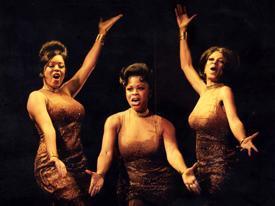
As terrible as a load-bearing musical may sound—isn't that what opera's for?—the great news about Caroline, or Change is that it's a full-service entertainment. Tesori's restless, accomplished score is an able partner in the storytelling and characterization: Caroline has her own strange, gripping blues idiom, which she plays off a gallery of glittering personifications of her washer (Capathia Jenkins), dryer (Chuck Cooper) and radio (the shimmering girl group of Tracy Nicole Chapman, Marva Hicks, and Kenna Ramsey). Her kids (Rose, Leon G. Thomas III and Corwin Tuggles) sing infectious schoolyard-rhyme pop that's a cousin to Noah's tuneful, openhearted parlando. Noah's distant father (David Costabile) sings in plaintive tones that echo his clarinet playing, while his tetchy stepmom (Veanne Cox) has a steely, sunny tone belied by her music's awkward dissonance.

There's also a priceless, hora-infused Chanukah scene with Noah's grandparents (Larry Keith, Alice Playten, Reathel Bean) that encapsulates mid-century Jewish Americana with the sort of wicked but warm-hearted humor only an insider could pull off.

Riccardo Hernandez's simple, shape-shifting set and the often stark lighting by Jules Fisher and Peggy Eisenhauer have the right rough magic for the musical's free, unbounded mix of the real and the dreamlike. Not everything in director George C. Wolfe's production works so well: While I liked the conceit of the personified appliances, and a haunting, death-like city bus played by Cooper, the introduction of a motherly, benedictory moon (Aisha de Haas) feels a misstep into generic symbolism. Additionally, a few of Kushner's otherwise mostly deft lyrics veer into forced-rhyme doggerel.

But there are few such bum notes in this bittersweet Caroline. Steered by the unblinking Pinkins, this is a rare Broadway vehicle indeed: a musical with genuine tragic dimensions and a catchy heartbeat.

Caroline, or Change plays through Dec. 26 at the Ahmanson Theatre, 135 N. Grand Ave., (213) 628-2772 or taperahmanson.com.

Oct 6, 2021

Lonergan, Off Again

Major Matt Mason.

In July of 2012, my friend and fellow blogger Isaac Butler asked me write a piece about Kenneth Lonergan's This Is Our Youth
for an "Adolescence Issue" of his blog Parabasis. One sticking point: I'd never seen it, though not for lack of trying. I discovered in my research for the piece that despite the splash it made Off-Broadway in 1998, it had been remarkably scarce on U.S. stages. (In addition to reading the script, I was able to catch an audio recording of the original cast doing the play.) I spun Youth's relative onstage scarcity, not to mention a lack of new work from its writer, into a whole thesis about Lonergan having "gone silent"—a take I was happy to see quickly demolished by the the release of the full cut of his contested film Margaret, the long-overdue Broadway bow of This Is Our Youth in 2014, the triumph of his 2016 film Manchester by the Sea, and the devastatingly great 2018 Broadway run of The Waverly Gallery.

That immediately dated take aside, I think the rest of my piece, placing This Is Our Youth in the context of both when it was written and when it was set, holds up and is worth having out in the world (now that Isaac's blog is password-protected). I've republished it below, with Isaac's blessing, including his intro. This hit the World Wide Web on Aug. 2, 2012.

Whether or not we've got the longest adolescence in the history of the world, we sure do keep returning to narratives about it all the time. Whether or not this is a good thing is a debate I'm all for having, but for the purposes of this issue, I suppose I'm a little more interested in what we say with these narratives. We have two pieces on that very subject. The first, from Rob Weinert-Kendt, focuses on Kenneth Lonergan's "This Is Our Youth," one of my favorite plays. —Isaac Butler 

What does it say about my generation that its putative voice—the playwright who once seemed like he might be the John Osborne, the Arthur Miller, possibly the Lanford Wilson of Generation X—has all but gone silent? True, few artists worth a damn would ever claim the mantle of generational spokesman, and dramatists—generally a high-minded and thin-skinned lot, at once self-doubting and self-important—probably least of all. But even in his heyday around the turn of the millennium, Kenneth Lonergan seemed singularly uninterested in speaking for anyone, and since then, with just two Off-Broadway plays since 2001, in speaking much at all (it was reassuring, if painful, to read that he's been partly waylaid in the interim by an Herculean struggle to get a single film completed).

Of course, in this obstinacy to be cornered or to wear a label, even that of “working playwright,” Lonergan may be the quintessential Gen-Xer: unpinnable, unmarketable, hushed into reflexive passivity by the solipsism and apparent hypocrisy of the Boomers who came before. It's a shame, though, because his signature works—the film You Can Count On Me, the plays Lobby Hero and This Is Our Youth—in fact did speak, in their halting, layered, ironic, exquisitely observed way, of and for a generation marked by lowered expectations, thoroughgoing mistrust balanced by a private and often blurry idealism, and inconspicuous consumption. My people.

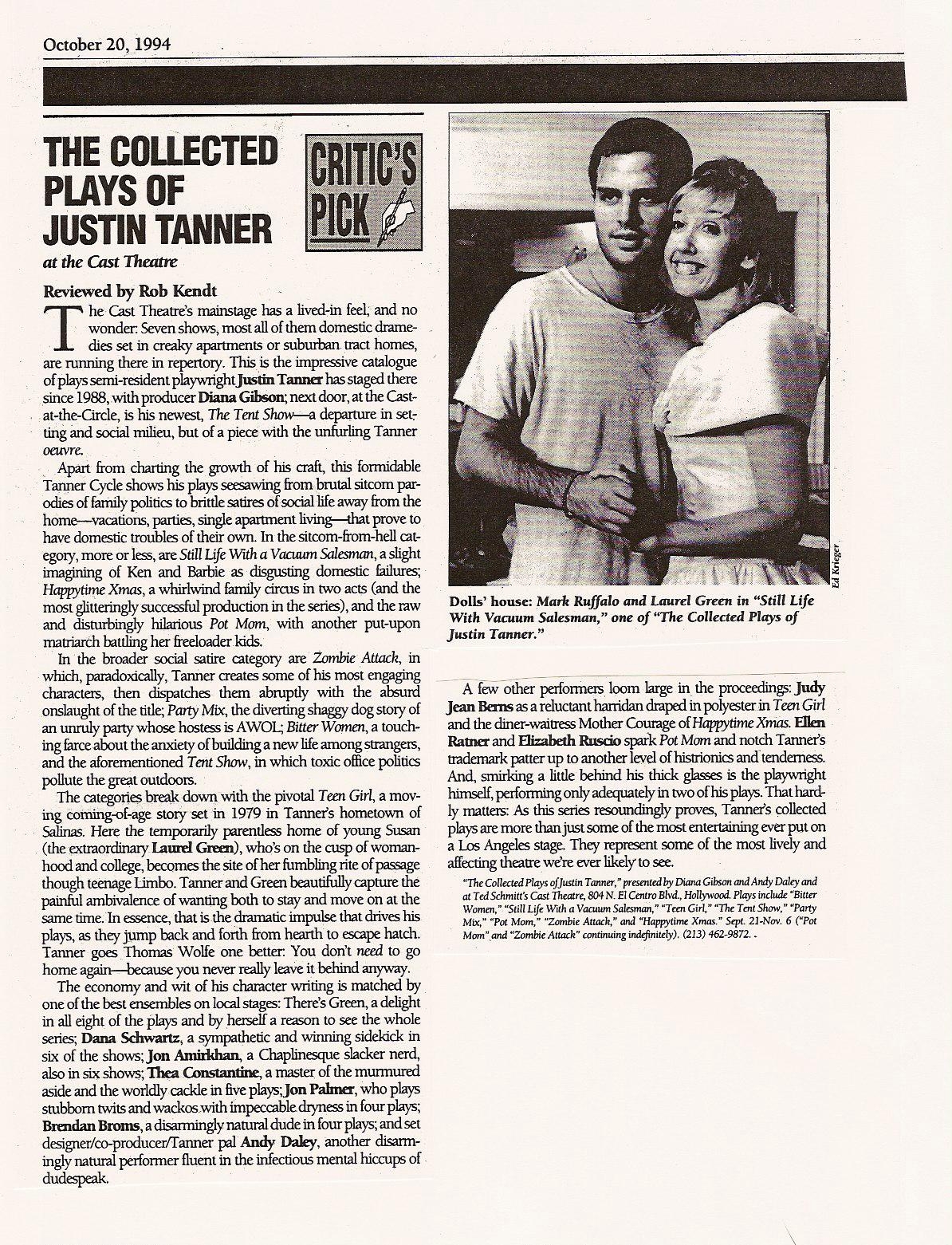
I lived on the West Coast until 2005, where I narrowly missed a chance to stumble upon Lonergan in his creative infancy: In 1993, a one-act called Betrayed by Everyone was first staged at the tiny Met Theater in Hollywood, starring a young up-and-comer from the local theater scene named Mark Ruffalo. It wasn’t until 1996, when an expanded version of that one-act, now with the portentous title This Is Our Youth and still starring Ruffalo, garnered rave reviews at New York’s INTAR Theatre, that Lonergan’s name came into my consciousness. I took a rooting interest in it based on Ruffalo's participation; by then he was something of an L.A. theater star, having memorably starred in plays by local hero Justin Tanner; I was happy to hear that his performance as Warren Straub, a troubled but lovable pothead teen, in Lonergan’s play was earning him comparisons to a young Marlon Brando. As for the play, it was reportedly little short of an annunciation: Here, those who’d seen it either said or implied, might be the next Great American Play, or at the very least the next Great American Playwright.

It was brought back again in 1998 by Second Stage with the same cast, but I never ended up seeing it—because, in fact, productions of this Great American Play have been startlingly thin on the ground, particularly compared to Lonergan’s widely performed 2001 play Lobby Hero, which I managed to see twice in just a few years in Southern California (and which my colleague Jason Zinoman has called not only the better play but the best American play of the 2000s). This Is Our Youth has had three runs at regional LORT houses: at Steppenwolf in 1999, at Philadelphia Theater Company in 2001, and at St. Louis Rep in 2005; and there has been no shortage of small-theater regional productions over the years (Frisco in 2002, Chicago in 2005 and 2011, Seattle in 2008). But to date, to my knowledge This Is Our Youth has never been professionally staged in Los Angeles, even by a 99-seat theater, as even Tracy Letts' Bug and Killer Joe have been (Youth was recently audio-recorded in Santa Monica with the original cast by L.A. TheatreWorks, which is how I eventually at last heard it). Its only commercial revivals thus far have been a starry West End run in 2002 and another similarly starry one early this year in Australia. That’s right—the play purported to define a generation has played in freaking Sydney, Australia, with American film stars in it—but hasn't yet been revived in New York or even staged in L.A. What’s wrong with this picture?

I don’t have an answer; over the years I’ve chalked up the relative scarcity of This Is Our Youth to something perverse or retiring in Lonergan himself—an advanced case of congenital Gen-X diffidence. That’s almost certainly unfair; the vagaries of theater production, particularly newish-play revivals, are surely more punishing and capricious than I can imagine. So I send hopeful vibes in the direction of Second Stage, which has lately become a home for just this kind of recent-landmark revival (Howard Korder's Boys' Life in 2008, Paula Vogel's How I Learned To Drive last year, next season Jason Robert Brown's The Last Five Years), and toward the Signature Theatre, where Lonergan recently staged his latest lark, Medieval Play, which would make a promising site for a Youth revival, as it was last year for another landmark ’90s work, Angels in America.

In fact, reading This Is Our Youth again recently, I was struck by its only similarity to Angels: They're both Clinton-era plays about the Reagan-Bush ’80s, and that quality of recent hindsight is a defining (you might uncharitably say limiting) element of both. Of course, that’s where any similarities with Angels end, and not just in terms of scale—This Is Our Youth is a three-character, single-set, essentially-real-time two-acter, while Angels is—well, Angels. Lonergan’s play is also the clear progenitor of a divergent strain in American playwriting; while Kushner's thematic and formal ambition could be seen as clearing the path for the likes of Sarah Ruhl, Rajiv Joseph and Katori Hall, Lonergan's fine-grained neo-naturalism has clear heirs in Annie Baker, Amy Herzog, and Stephen Belber.

And if Kushner's prescient epic presaged both the right-wing retrenchment of the Bush II years and the velvet revolution in gay rights (and, it might even be argued, helped set the table for our culture's current Mormon moment), Lonergan's aimless-stoner portraiture seemingly had no such culture-wide reverberations. But it is no less a reflection of its ambivalent age; possibly moreso, because by keeping his scope narrow and his focus intense, Lonergan captures more of the texture of life as it was lived in the hangover-morning-in-America of the early '80s—1982, to be precise, the year Gay Mens’ Health Crisis was founded to address a troubling new “gay cancer” and Nancy Reagan started telling kids to “just say no” to drugs.

Indeed, it was a time when the Reagan “revolution” was making headlines but had barely begun to sink in. This accounts for some of This Is Our Youth's patina of innocence; these young folks have barely an inkling what's ahead for them, both personally and culturally. But apart from the play's stray references to the nation’s new president, most of them hostile or incredulous, there’s writing on the wall of This Is Our Youth if you know where to look: For one thing, the Upper West Side where Dennis Ziegler and Warren Straub strut like slacker princes, toking and fretting in the limbo between high school and the next indeterminate step, had in the early ’80s only fairly recently been gentrified, in the first wave of what would become the Giuliani/Bloomberg turnaround—which would in turn become an emblem of the way ascendant conservative ideas about wealth, property, and class seemed to trump (yes, I use the term advisedly) old party lines.

After all, Clinton Democrats—even the reluctant, Nation-reading lefties who thought he was a bit of redneck and would have preferred to vote for his wife—proved to be among the city’s most fervent gentrifiers, and many fit the profile of This Is Our Youth’s offstage parents. As Jessica Goldman, the brittle, argumentative 19-year-old who’s clearly into Dennis but settles, not entirely unhappily, for Warren, describes them, “kids from the Sixties who were so righteous about changing the face of civilization, and then the minute they got older they were all like, ‘Actually, you know what? Maybe I’ll just be a lawyer.’ ” The yuppie sellout was a popular trope at the time, and it had a lot of truth in it. But not only does Warren, with preternatural old-soul circumspection, seem skeptical that people change as much as Jessica imagines they do; Lonergan is also subtly sympathetic to those offstage parents, not least because he implicates us into feeling parentally protective toward the play’s confused teen trio.

The play’s final big speech, for example, puts the struggles of Warren’s dad—a self-made lingerie manufacturer whose wealth hasn’t been enough to shield him from tragedy and loneliness, any more than the $15,000 in cash Warren has casually lifted from him could do—into sobering perspective. And a stage direction just after that speech, “Warren looks at [Dennis] as if from a very great distance,” offers a key to the play’s sneaky wisdom about the passage of time, about the ways nostalgia can take root in the present tense, a stubborn bloom in the sidewalk cracks of our lives. Ruffalo famously argued with Lonergan about casting him and Josh Hamilton, both of whom were pushing 30, in the roles of 19-year-old Warren and 21-year-old Dennis, pointing out—quite rightly, it turned out—that with the benefit of hindsight they could interpret post-adolescence better than actors who were actually going through it.

That "great distance" stage direction is one clue why slightly older actors make such a good fit for the play, and why it's ultimately much more than a proto-Apatovian stoner sitcom. This Is Our Youth beautifully, I’d even say definitively, captures the terribly self-conscious purgatory between adolescence and adulthood, the point when young people start to wax preemptively wistful about their youth—both in recalling their already idealized past, and also, more poignantly, in speculating how they will recall the often ugly and seemingly pointless blur of their transitional present. Warren’s satchel full of vintage toys and records, ultimately sold off in a pinch, is only the most obvious loss-of-innocence symbol, and Dennis has a striking early speech in which he portrays himself as less a simple drug dealer than as the put-upon peddler of his peers’ future warm memories.

But the awakening from childhood to adulthood, with its own bounty of terrors and disappointments, is also embedded in the play’s arc; by the end, high-strung alpha-male Dennis, shell-shocked by a close encounter with senseless death, has gone from treating his clumsy, wayward friend Warren as a punching bag to all but supplicating for a return to Warren's good graces. This, for Dennis, is growth, while for Warren, who has clearly attained some quiet glimmer of insight within the play's not-quite-24-hour time span, growth is marked by that sympathetic speech about his abusive dad and that distant, almost contented look with which he closes the play.

As Dennis and Warren share a last joint before the final curtain, it serves as a rite to mark the passing of a worn-out childhood bond and the negotiation of different, necessarily more conditional terms of friendship. The world they face is the one we now know all too well, for better or worse. The rest is memory.